
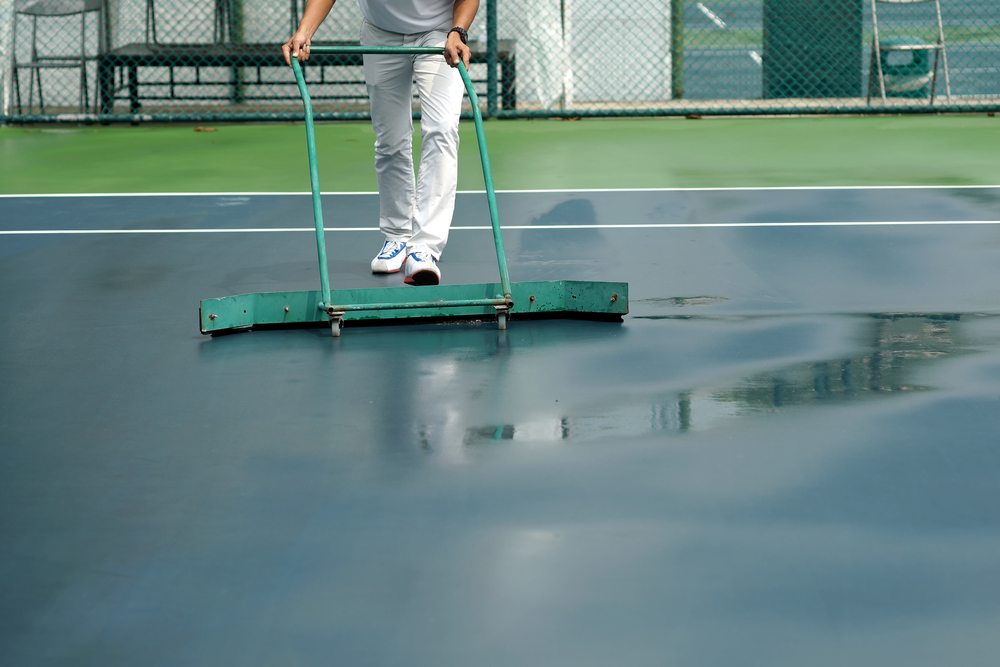
It’s a common question for outdoor tennis players, particularly as we approach one of the wettest seasons in Utah: How long do tennis courts take to dry after a rainstorm or some other moisture event? The answer depends on a few key factors.
At Courts Unlimited, we’re proud to offer an unmatched selection of residential and commercial tennis court surfacing services for clients around Utah, plus services like backyard basketball court surfacing, pickleball court surfacing and more. We’re also happy to offer basic expertise on all of our court products, including on topics like these. This two-part blog series will look at all the key factors in how long it takes a tennis court to dry, from some general averages to the major variables that will play a role here.
Why Wet Tennis Courts Are Risky
Before we get into the specific factors that impact how long a tennis court takes to dry, let’s discuss why this is an important topic in the first place. Simply put, wet tennis courts are risky for players – they not only cause inconvenience and frustration, but also pose serious health hazards.
Slippery surfaces due to moisture can lead to falls and injuries, especially during high-intensity games where quick movements are essential. Additionally, wet courts can also damage equipment and even affect gameplay by slowing down the ball or causing it to bounce unpredictably.
General Drying Times
While drying times can vary depending on several factors we’ll cover later, there are some general averages worth noting:
- Asphalt-based courts: 24-48 hours
- Concrete courts: 8-12 hours
- Acrylic courts: 4-6 hours
Again, these are general guidelines and will vary depending on specific conditions. However, they can give you a good idea of what to expect in terms of drying time for different types of tennis courts.
Our next several sections, and on into part two of our series, will detail these additional conditions or factors that will influence tennis court drying time.
Sunlight Vs. Shade
As you may have guessed, one of the chief factors impacting drying time is whether the tennis court is in direct sunlight or under shade. Courts placed in direct sunlight will dry much faster than those in shaded areas, as UV rays help evaporate any moisture on the surface.
Additionally, even within the same court, different areas may take varying amounts of time to dry based on their exposure to sunlight – for example, a baseline area may dry sooner than a corner that remains in shade.
Wind and Humidity
Another key variable here is wind speed and humidity levels. A strong breeze can help reduce drying time by blowing away moisture, while high humidity levels will prolong it.
In part two of our series, we’ll go into detail on how these and other factors like court slope, court age and more will influence tennis court drying time. In the meantime, if you have any questions or want to learn about any of our court services, speak to the pros at Courts Unlimited today. We’re here to help!